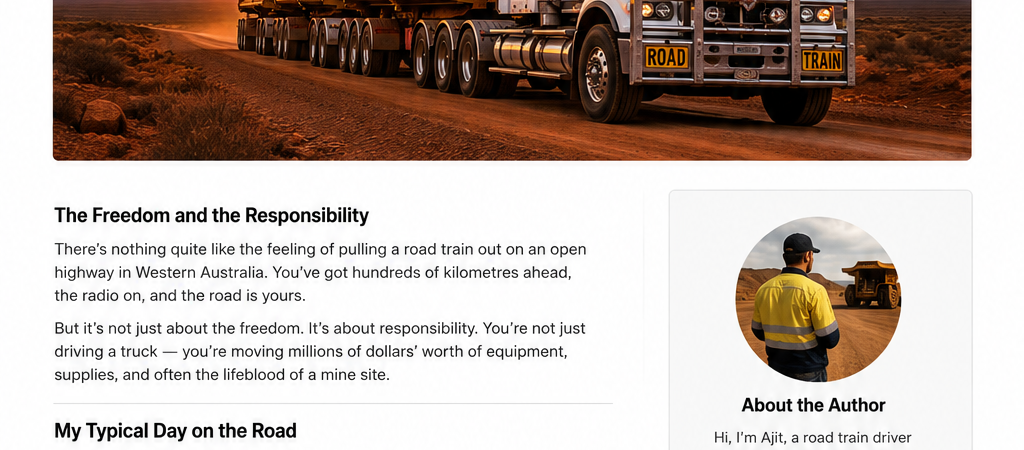
Learn how to become a road train driver in Australia. Discover licence requirements, skills, salaries, FIFO opportunities, and what life is really like behind the wheel.
Australia is home to some of the world’s biggest trucks. Road trains are an iconic part of the country’s transport industry, moving millions of tonnes of freight, fuel, mining equipment, livestock, and minerals across vast distances every year. These powerful combinations can stretch more than 50 metres long and are essential to keeping regional Australia and the mining industry operating.
Many people dream of becoming a road train driver because of the excellent earning potential, the adventure of travelling across remote Australia, and the opportunity to work in industries such as mining and logistics. However, the job also comes with significant responsibility and requires the right training, experience, and attitude.
In this guide, you’ll learn what a road train driver does, how to get started, the licences you’ll need, the skills employers value, and what to expect from the lifestyle.
What Is a Road Train?
A road train is a heavy vehicle consisting of one prime mover towing multiple trailers. They are commonly used throughout Western Australia, the Northern Territory, Queensland, and South Australia, particularly in remote regions where transporting large volumes efficiently is essential.
Road trains are used to haul:
- Iron ore
- Lithium
- Gold mining supplies
- Fuel
- Livestock
- General freight
- Grain
- Heavy equipment
Their size and weight make them one of the most specialised vehicles on Australian roads.
Why Are Road Trains Important?
Australia has enormous distances between towns, mines, farms, and ports. In many areas, rail infrastructure is limited or unavailable, making road transport the most practical option.
Road trains help reduce transport costs, improve efficiency, and keep essential industries supplied. Without them, many remote communities and mining operations would face major logistical challenges.
Licence Requirements
Every driver starts with the correct licence.
The exact requirements vary by state and employer, but most road train positions require experience with heavy vehicles before progressing to multi-combination combinations.
Many employers also value:
- Excellent driving history
- Strong safety awareness
- Fatigue management knowledge
- Medical fitness
- Drug and alcohol compliance
Experience often matters just as much as qualifications.
Skills Every Road Train Driver Needs
Driving a road train is about much more than steering a large truck.
Successful drivers develop skills such as:
- Defensive driving
- Trip planning
- Load security awareness
- Vehicle inspections
- Communication with dispatch and mine personnel
- Time management
- Problem solving
- Patience under changing weather and road conditions
Professionalism is essential because drivers often work independently for long periods.
A Typical Day
No two days are exactly the same, but many shifts include:
- Pre-start inspections
- Checking tyres, lights, brakes, and trailer connections
- Reviewing paperwork and load details
- Travelling long distances
- Loading or unloading
- Refuelling
- Completing safety documentation
- End-of-shift inspections
Planning ahead and maintaining concentration throughout the shift are key parts of the job.
Working in the Mining Industry
Mining offers some of Australia’s most rewarding road train opportunities.
Drivers may transport:
- Ore
- Fuel
- Water
- Explosives support equipment (where authorised)
- Camp supplies
- Machinery
Mining companies place a strong emphasis on safety, communication, and following site procedures.
Many positions operate on FIFO (Fly-In Fly-Out) rosters, where workers spend a set number of days on site followed by scheduled time at home.
Challenges of the Job
Road train driving is rewarding, but it isn’t easy.
Common challenges include:
- Long shifts
- Remote locations
- Heat and dust
- Wildlife hazards
- Isolation
- Strict safety procedures
- Fatigue management
Successful drivers prepare carefully, follow company procedures, and never take shortcuts.
Rewards
Many drivers enjoy:
- Competitive pay
- Variety in daily work
- Travelling through unique Australian landscapes
- Working with modern heavy equipment
- Career progression into specialised transport roles
- Pride in supporting Australia’s economy
For people who enjoy driving and working independently, it can be a highly satisfying career.
Tips for Beginners
If you’re interested in becoming a road train driver:
- Build experience driving heavy vehicles.
- Maintain a clean driving record.
- Continue learning from experienced operators.
- Take safety seriously every day.
- Develop good communication skills.
- Stay physically and mentally fit.
- Be patient—experience takes time.
The most respected drivers are known not just for their driving ability but also for their professionalism and commitment to safety.
Final Thoughts
Road train drivers play an essential role in Australia’s transport and mining industries. While the job demands responsibility, preparation, and ongoing learning, it also offers opportunities to build a rewarding career in one of the country’s most important sectors.
Whether your goal is to work in general freight or eventually join the mining industry, investing in your skills, maintaining high safety standards, and continually improving your knowledge will help you build a successful career.
If you found this guide helpful, explore the other articles on this website covering FIFO life, mining careers, road train operations, safety, and the Australian resources industry.
FOR MORE INFORMATION VISIT TO MY YOUTUBE CHANNEL https://www.youtube.com/channel/UCoJZ1rD_1vSZWnI-dwCqwyw